The Conversation
26 Aug 2025, 13:51 GMT+10
Share article
Print article
Public concerns about fentanyl's proliferation across Canada have focused on overdose deaths and drug-related disorders. However, in addition to these pressing concerns, our recent research in Thunder Bay, Ont., unmasks additional impacts of Canada's street-based drug economy.
Our work with 81 unhoused and street-involved community members reveals how big-city drug traffickers moving into smaller Canadian communities can wreak havoc. These out-of-town dealers often forcefully take over people's homes so they can use them as a base to sell and produce drugs.
These groups and their home takeovers are a significant contributor to homelessness. Home takeovers force people out of housing and into homelessness, deepening cycles of poverty, housing instability and trauma.
In recent years, drug trafficking groups have distributed and manufactured fentanyl within and beyond Canada. Canada's major urban centres, like Toronto and Edmonton, are now saturated with various criminal groups competing for a share of profits from the illicit drug trade.
Consequently, some groups have figured out that expanding or exporting their operations into smaller Canadian communities like Thunder Bay can be immensely profitable. Smaller cities often bring less competition, significantly drive up drug prices and provide these newly arrived dealers with greater anonymity from law enforcement.
Drug traffickers' movements into smaller cities have raised serious public safety concerns, increasing local residents' exposure to gun and drug-related violence.
Organized drug trafficking networks have significant resources but even so, moving into a new community to set up shop within the criminal underworld is no easy task.
One reason is that smaller communities often have some established players in the informal drug economy who may not be willing to step aside or share their client base with the newly arrived urban dealers.
That means entrepreneurial groups have adapted the long-standing practice of deploying home takeovers within drug economies. This works for their market expansion efforts..
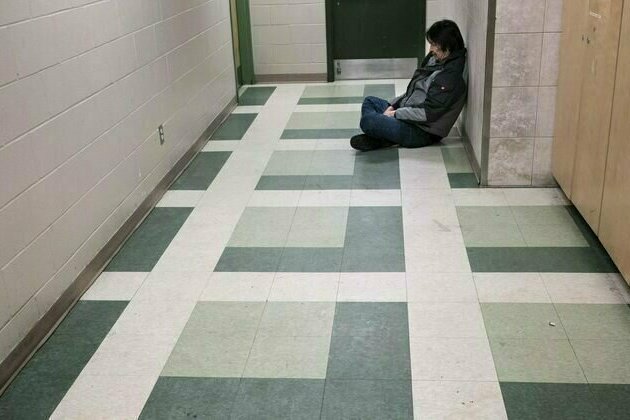
In a home takeover, out-of-town drug traffickers prey on low-income residents in social housing units and those who are otherwise marginalized. They forcefully take over their residence, and convert them into "trap houses."
In other words, people's residences become the base from which these groups produce and sell drugs and operate their business. These trap houses shield the drug traffickers from police and other authorities by reducing their need to sell drugs in public spaces.
Residents often have no choice but to accept these groups into their residence. Our research participants reported that out-of-town drug traffickers use a range of violent, coercive and manipulative tactics to gain initial access to their homes, including providing free drugs, forcing drug repayments, violence and extortion.
As one of our participants said, resisting a home takeover is almost impossible because drug traffickers can always find a way into their homes and will retaliate if they can't get in:
"...they find their way in. There's always a way in, and there's always a weak point."
Drug traffickers often prey on seniors or newly housed individuals, often within days or weeks of them moving in:
"When a homeless person gets pulled off the street, and they get given [a housing unit]... [the drug traffickers] reach out anywhere between six and eight weeks, and then it becomes a trap [house]."
Residents whose homes have been taken over are left with little to no recourse.
Reporting takeovers to police or housing authorities is rarely an option. Many residents fear eviction, criminal charges or that dealers will retaliate with violence toward them or their family and friends. As one participant put it:
"If you call the cops, you're probably dead."
Given these fears, they see abandoning their home as the only way to escape this dire situation.
By not reporting to their housing authority or police, their homelessness and need for new housing remain undocumented. Critically, many former residents are often precluded from joining other housing support waiting lists.
Even after moving and somehow managing to get a new residence, several of our participants became homeless once again after their new place was also taken over.
Home takeovers should be treated as a serious risk factor for homelessness.
Social housing providers can help by creating pathways for residents to report these takeovers safely, protecting them from legal consequences, and by moving people quickly into a new residence if needed, without penalizing them.
Police also play a critical role. They must treat residents experiencing home takeovers as victims, not as suspects, and build trust with the victimized individuals assuring them that they can be protected from retaliation if they speak up.
Addressing home takeovers is not only about limiting drug trafficking - it is also about protecting people's homes, reducing homelessness and strengthening community safety.
Get a daily dose of Toronto Telegraph news through our daily email, its complimentary and keeps you fully up to date with world and business news as well.
Publish news of your business, community or sports group, personnel appointments, major event and more by submitting a news release to Toronto Telegraph.
More InformationJACKSON HOLE, Wyoming: When central bankers from around the world gathered in Jackson Hole, Wyoming, this weekend, their conversations...
NEW YORK CITY, New York: Alphabet's Waymo has secured its first permit to test autonomous vehicles in New York City. This allows the...
TOKYO, Japan: Matcha, the finely ground green tea powder long associated with Japan's centuries-old tea ceremony, has become a global...
NEW YORK, New York - U.S. stocks advanced Tuesday despite another attempt by President Donald Trump to undermine the Federal Reserve...
SARASOTA, Florida, - Trump Media and Technology Group Corp, operator of the social media platform Truth Social, the streaming platform...
WASHINGTON, D.C.: The U.S. government will take a nearly 10 percent equity stake in Intel, converting billions of dollars in federal...
MONTREAL/CHICAGO: Air Canada's tentative labor deal with its flight attendants, reached after a crippling strike that grounded thousands...
(Photo credit: Nick Wosika-Imagn Images) Minnesota Twins returned right-hander Simeon Woods Richardson from his rehab assignment...
(Photo credit: Dan Hamilton-Imagn Images) The Toronto Blue Jays are facing some bullpen questions that will continue past the rubber...
Kabul [Afghanistan], August 27 (ANI): Afghanistan have roped in former Ireland all-rounder John Mooney as their new fielding coach,...
NEW DELHI, Aug. 27 (Xinhua) -- Some 87 years ago, a young Indian doctor, Dwarkanath Kotnis, left his family for China, a country struggling...
Share article Print article Since taking office, United States President Donald Trump has used tariffs to address perceived trade...